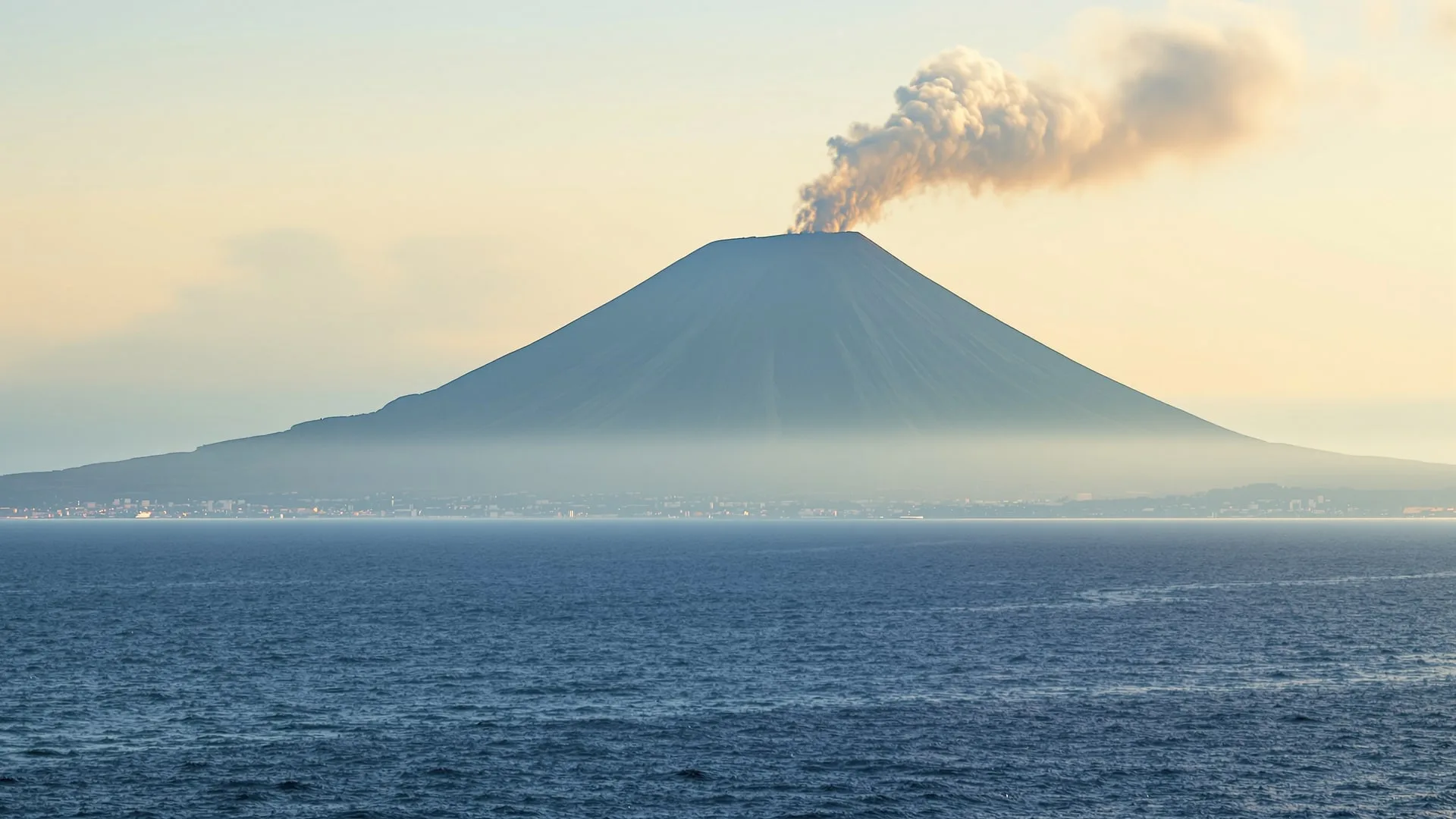
Doing Mount Etna as a day trip from Malta in 2025
We did the Malta to Mount Etna day trip by catamaran in summer 2025. Full honest account: the journey, the volcano, the cost and whether it's worth the effort
At a glance: Malta to Etna day trip
| Where | Catania, Sicily, via catamaran from Marsa |
| Cost | Around €140-165 per person all-in (crossing, transfers, cable car, off-road vehicle) |
| Time needed | Full day, roughly 12-13 hours door to door |
| Getting there | High-speed catamaran, Marsa near Valletta, departs around 7am |
| Best time | Tuesday or Wednesday for lighter crowds on both the boat and the cable car |
| Book ahead | Yes, several weeks in August |
The pitch sounds almost too good
Malta to Mount Etna and back in a day. That is what the catamaran day trip advertises, and it sounds almost implausible: you leave Malta in the morning on a high-speed vessel, arrive in Catania in 90 minutes, transfer to Europe’s largest active volcano, spend a few hours at altitude, and return to Malta in time for a late dinner. On paper it takes about 12-13 hours door to door.
I have done the Sicily day trips from Malta three times now — once to Etna, once to Taormina, once to both combined as a longer two-day excursion. The Etna version is the most physically demanding and the most memorable. Here is the honest account of the August 2025 crossing.
The logistics: how it actually works
The high-speed catamaran crosses from Marsa, near Valletta, to Catania in approximately 90 minutes. The vessel is large — one of the commercial high-speed catamarans that operate across the central Mediterranean, carrying passengers and some cargo — and the crossing in summer conditions is comfortable. August in the Mediterranean means calm water; the crossing on this day was essentially flat, with the Malta coastline visible for the first twenty minutes and Etna visible on the Sicily horizon for the last thirty.
Departure from Marsa was at 7am. This meant leaving accommodation in Sliema around 6:15am to reach the port with time to spare. Bolt from Sliema at that hour was about 10-12 euros. If you are staying in Valletta, you can walk to the port area.
The Marsa terminal is straightforward. Check-in is efficient, and the large groups joining the organised tours board in sections. If you have booked an independent ticket rather than through an organised tour, there are transfers arranged at the Catania port.
Malta: Mount Etna and Catania Guided Day Trip by Catamaran↗Catania arrival and the drive to Etna
Catania arrival was around 8:30am. From the port, organised tour transfers to the Etna cable car station depart quickly — they are waiting at the port for you. The drive takes roughly 50-60 minutes, winding up through the suburban sprawl of Catania’s lower city and then through the lava-flow zones of Etna’s southern slope. The landscape changes dramatically as you gain altitude — from Mediterranean cultivation through evergreen forest and then into the volcanic zone where the last eruptions have left black lava fields.
The cable car runs from the Rifugio Sapienza station at about 1,900 metres. In August 2025, the cable car was operational without issues and queued perhaps 20-25 minutes at our arrival. The queuing time varies considerably depending on tour group timing and the day; some groups arrive to find no queue at all, others wait 40 minutes.
Above the cable car at 2,550 metres, off-road vehicles run groups to approximately 2,900-3,000 metres. This is a separate cost — not included in most basic day-trip packages — and runs 30-40 euros per person for the vehicle transport plus guide. For the full Etna experience, this is worth paying. What you gain is the difference between seeing Etna from a tourist viewpoint at the cable car arrival station and actually standing on the volcanic flank near the summit craters.
What you see and experience at altitude
At 2,900 metres on the southern flank of Etna, the landscape is genuinely extraordinary in a way that is difficult to convey fully in photographs. Black lava fields extend in every direction, interrupted by yellow sulfur deposits at active fumarole vents. The craters are visible above you — the main crater complex at approximately 3,340 metres, plus the subsidiary craters that have opened along the flanks in various eruption events over the past century.
In August 2025, Etna was in a period of moderate background activity. No dramatic lava flows; steady fumarolic activity from the summit craters, visible as a persistent plume of white steam. The smell of sulfur at altitude was noticeable but not overwhelming at our position around 2,900 metres.
The views, on a clear August day: the coast of Sicily far below in every direction, the city of Catania visible as a grey spread against the blue Ionian Sea, and — to the south, on the horizon, just barely visible as a low grey-brown smudge — Malta. Standing on the volcano looking back toward the island you departed from a few hours ago has a specific quality that stays with you.
The air at 2,900 metres was around 14-15 degrees — dramatically cooler than the 33 degrees at sea level in Catania. Wind was blowing steadily. In August, the temperature difference between sea level and the volcanic flank is one of the genuinely pleasant aspects of the day — the relief from the heat is immediate and comprehensive. Bring a proper layer; the wind at altitude in summer is enough to make a t-shirt inadequate even in August.
The time pressure: the honest calculation
The aspect of the Etna day trip that the brochure describes incompletely is the time pressure. Here is the real allocation:
- Catania port to cable car station: 50-60 minutes driving
- Cable car queuing and ascent: 30-50 minutes depending on queue
- Off-road vehicle transfer to 2,900m: 20-25 minutes
- Time at altitude: approximately 60-90 minutes (depending on the tour schedule)
- Return down: 40 minutes off-road vehicle plus cable car descent
- Transfer from cable car station back to Catania port: 50-60 minutes
Working backward from the catamaran’s return departure time of 6pm, you have roughly 8.5 hours in Sicily from port arrival to port return. Subtract travel time and you have approximately 5-6 hours of usable time, of which perhaps 90 minutes is actually spent at altitude near the volcanic craters.
You have no time to explore Catania on this day trip. You see the inside of a transfer vehicle and the volcanic mountain. If Catania — the baroque city, the fish market, the archaeological museum — is something you want to experience, you need a separate Sicily visit.
This is not a complaint; it is a clarification. The experience of the mountain itself justified the entire day for me. But understanding the time structure ahead of the trip allows you to make the right choice between the Etna option and the Taormina alternative, where the destination is the charming hilltop town rather than a challenging hike.
Malta: Mount Etna and Taormina Guided Day Trip by Catamaran↗Cost breakdown for August 2025
The organised tour version of the Etna day trip, including the catamaran crossing, transfers, cable car, and off-road vehicle transport, was running at approximately 140-165 euros per person in August 2025. Individual components:
- Catamaran crossing alone: roughly 70-80 euros return
- Guided tour package (transfers, cable car, vehicle): roughly 60-80 euros additional
- Off-road vehicle above cable car (if not included in package): 35-40 euros
- Personal spending (water, a meal at the rifugio, cable car if separate): 20-30 euros
This makes it the most expensive single day on a standard Malta trip by a significant margin. For most visitors to Malta, the budget for activities on a 7-day trip might average 50-70 euros per day. The Sicily day trips, at 140-160 euros all-in, use two to three days of that budget in one go.
Whether that is worth it depends entirely on your interests. For someone who is in Malta primarily for beach and culture, the Sicily day trip is a significant financial commitment for a marginal addition. For someone who wants extraordinary experiences and has the budget, it is completely justified.
Was it worth it?
For me: yes, and I would do it again. The crossing alone is genuinely enjoyable — seeing Malta from the sea as you leave at dawn, watching Etna appear on the horizon as you approach Sicily. The mountain itself delivered everything it promises and more. The scale of the thing, standing near the summit craters of Europe’s most active volcano with the entire eastern Mediterranean visible below, is not an experience you replicate anywhere else accessible in a day.
The caveats are real. The day is long and the early departure is demanding after an evening out. The actual time on the mountain is shorter than the promotional framing implies. The cost is substantial.
But that moment — looking south from 2,900 metres on Etna and seeing Malta as a barely-visible smudge on the horizon, thinking about the crossing you made that morning — that was worth the price of the ticket several times over.
Practical planning notes
Book ahead: August departures sell out several weeks in advance. Do not show up at the port hoping for a ticket in peak season.
Best days: Tuesday or Wednesday, when the catamaran is less crowded than weekend departures and Etna is less likely to have queuing issues at the cable car.
Weather check: Etna can be closed to upper access due to weather or volcanic activity. Check the morning of departure — the tour operator will know. If the cable car is closed for safety reasons, some tours substitute Taormina or Catania city time, which changes the value proposition considerably.
What to wear: Light clothing for the sea level journey, plus a warm layer (fleece or light jacket) for the altitude. Water is expensive at the rifugio; bring a bottle. Sturdy shoes if you are doing the vehicle transfer above cable car.
Return timing: The catamaran back to Malta departs in late afternoon. The organised tours are structured to make that return time with buffer, but independent travellers should track time carefully at the cable car station.
For planning a Malta itinerary that includes Sicily day trips, these work best on days three to five of a 7-day trip — after you have done the main Malta sites but before the final beach day.
Etna versus the other Sicily day trips
If you are choosing between Sicily options, here is how the three main catamaran day trips compare:
| Trip | Best for | Physical demand | Approx. cost |
|---|---|---|---|
| Etna | Landscape, volcanic scale, a genuine “wow” | High (altitude, off-road transfer, cold wind) | €140-165 |
| Taormina | Charming hilltop town, easier pace, photography | Low | Similar range, less physically taxing |
| Syracuse | Baroque architecture and ancient Greek ruins | Low-moderate | Similar range |
If you want the volcano and can handle an early start and a cold, windy hour or two at altitude, Etna is the standout. If you would rather stroll a beautiful town at a relaxed pace, Taormina is the better choice.
From Malta: Mt. Etna & Syracuse Day Trip with Guide↗FAQ
Is the Etna day trip suitable for people with limited mobility? Not really. It involves a cable car, an off-road vehicle transfer over rough terrain, and walking on uneven volcanic ground at altitude in cold wind — it is one of the more physically demanding day trips from Malta.
What happens if Etna is closed the day of my trip? Operators typically substitute Taormina or extra time in Catania if the upper cable car or off-road access is closed for weather or volcanic activity, though this changes the value of the day considerably since the volcano was the main draw.
Related guides

Catania from Malta: a quieter Sicilian day trip
Catania day trip from Malta by catamaran: the baroque city, fish market, and Etna. Cost €100–140, who should book it, and what you see in 2 hours

Mount Etna from Malta: is the day trip really worth it?
Is the Etna day trip from Malta worth 8 hours of travel? Honest guide to logistics, what you actually see at 1900m, cost €100–160, and who should skip it

Modica, Ragusa and Scicli from Malta: a baroque road trip
Can you do baroque Sicily as a day trip from Malta? Yes — Ragusa Ibla, Modica chocolate, Scicli in one long day. Cost €110–150, who it suits and who it doesn't

Day trips to Sicily from Malta: 6 options compared
Can you really do Sicily as a day trip from Malta? Yes — by catamaran. 6 routes compared honestly: Etna, Taormina, Syracuse, Catania, Modica