Malta in April 2024: shoulder-season pricing reality
We tracked flights, hotel rates and activity prices for Malta in April 2024. Here's what shoulder season really costs and whether it's worth it
Shoulder season sounds great in theory
April at a glance: Cost tier: around 20-30% cheaper than August overall, driven mostly by flights and hotels, not activities. Weather: 17-21°C days, sea around 17-18°C (cool for swimming). Crowds: noticeably thinner than June onwards, except Easter week and the last weekend of the month. Best window: 7th-22nd April, booking hotels 6-8 weeks out. Watch for: Easter week and the International Fireworks Festival weekend both behave like mini-peaks inside the month.
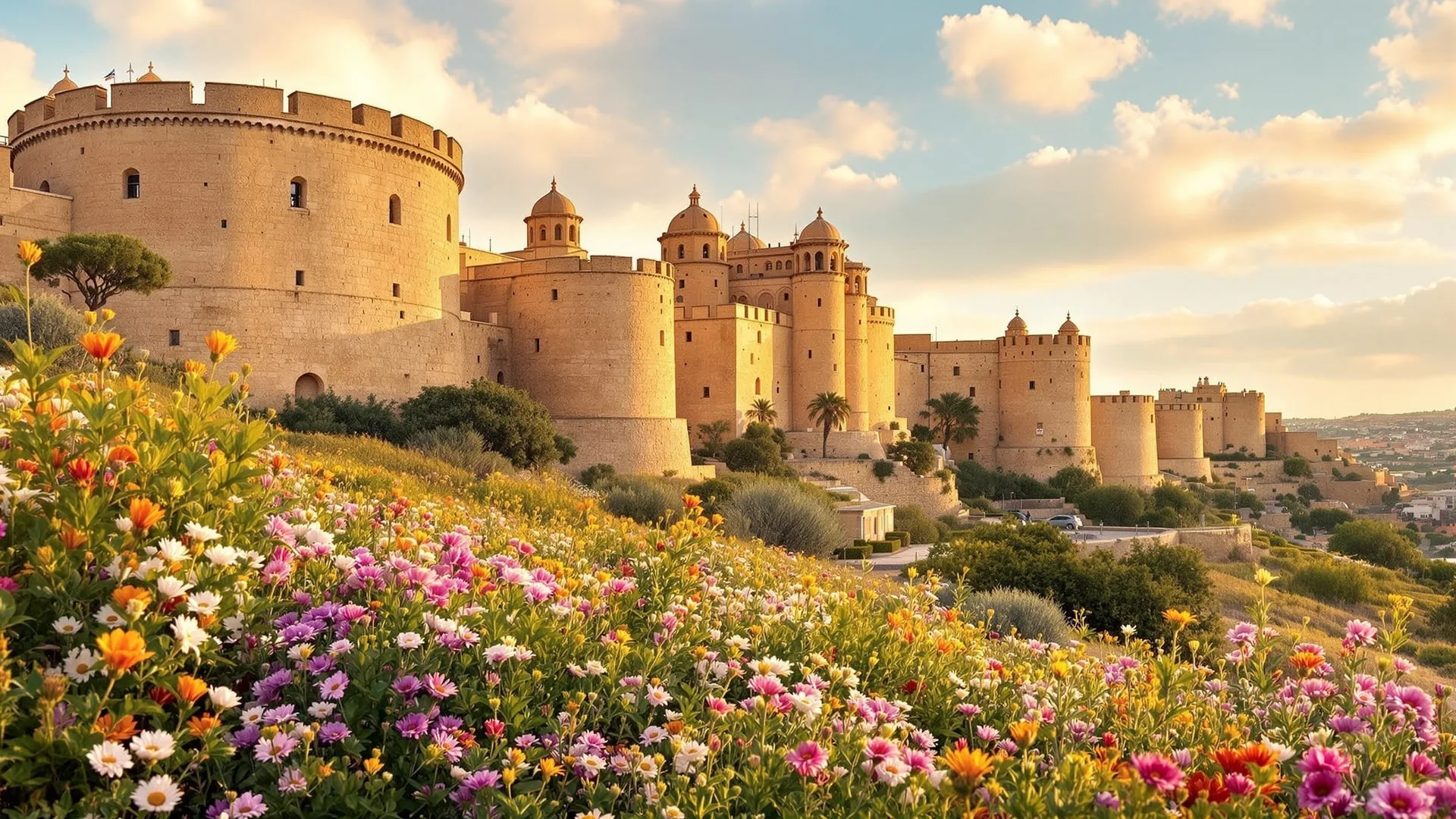
“Go in shoulder season” is the advice every Malta guide gives you, right after the paragraph about avoiding the summer crowds and right before the paragraph about the Comino Blue Lagoon being unbearable in August. And it is generally good advice. April in Malta is genuinely pleasant: temperatures between 17 and 21 degrees, the island still green from winter rains, wildflowers visible on the roadsides and the cliff edges, and significantly fewer visitors than June onwards.
But “shoulder season” has become a marketing term as much as a meteorological one, and the pricing reality of April 2024 was more nuanced than many articles suggest. The gap between summer peak and shoulder season is real but not as dramatic as sometimes implied — and it varies considerably by category. Here is what we actually tracked across the main cost categories.
What flights actually cost in April 2024
For UK departure points (London, Manchester, Edinburgh), April 2024 flights to Malta International Airport were running at approximately 60-75% of peak August prices for the equivalent booking lead time. Some real numbers from our tracking:
London Gatwick to Malta, mid-April, booked eight weeks ahead: roughly 180-230 euros return per person on Ryanair or easyJet, depending on specific dates and which sale was running. The range reflects genuine variation between early April (cheaper) and late April (pricier).
Easter week and the week immediately after can spike these significantly. Easter 2024 saw fares comparable to June peak or higher, because Easter in Malta is a major religious and cultural event that draws visitors specifically for the Holy Week processions. If you are going in April and want the real shoulder-season saving, target the weeks that are not Easter.
The same routes in July-August: 280-380 euros return. So the saving exists — roughly 80-150 euros return per person for mid-April compared to August peak. That is meaningful across a couple, but it is not the dramatic 50-60% saving that some sources imply.
For European mainland departures (France, Germany, Italy, the Netherlands), the absolute prices are lower due to shorter distances, but the proportional shoulder-season saving is similar.
Hotel rates: more significant savings
Hotel pricing showed more meaningful shoulder-season savings than flights. A mid-range 4-star hotel in Sliema or St Julian’s in April 2024 was running at roughly 90-140 euros per night for a double room, compared to 150-220 euros for the equivalent in July-August. That is a genuine 30-40% discount, which matters significantly for a week’s trip.
Valletta accommodation — the boutique hotels that dominate the city’s upper area — was slightly less discounted in April, reflecting consistently strong year-round demand from cultural tourism. Expect 120-200 euros for a decent Valletta boutique hotel in April, versus 170-270 euros in August. The discount exists but is smaller.
Budget accommodation — hostels, B&Bs in Mellieha or Bugibba, basic aparthotels — was proportionally cheaper in April: often 40-60% of summer rates for a private room. If budget travel is your mode, shoulder season has the most dramatic impact.
One important qualification: within April, pricing is not flat. Easter week and the last week of April (Malta’s International Fireworks Festival happens on the last weekend of April most years) represent genuine mini-peaks. Hotel rates for Easter week in Valletta specifically can match or exceed June prices. If you want the best April rates, target the 7th to the 22nd, staying clear of Easter and the fireworks period.
Activity and tour prices: mostly stable
Here is where the shoulder-season framing partly breaks down. The major organised activities — Gozo day trips, Blue Lagoon cruises, temple visits, walking tours — showed little or no seasonal price variation.
Tour operator prices on GetYourGuide and similar platforms are largely fixed year-round. The Valletta walking tour costs the same in April as in August. St John’s Co-Cathedral entrance is the same price. Heritage Malta site entry fees are fixed. The main variable is not price but availability and the experience of fewer people at each site.
Valletta: 3-Hour Walking Tour↗The exception is boat charters, where some operators quote slightly lower prices in shoulder season for private full-day bookings. And for group tours where you might get a smaller group in April — not a formal discount, but you effectively get a more personal experience for the same price.
For planning purposes: your April savings come from flights and accommodation, not from activities. Budget the activity costs at summer-equivalent prices and treat the transport and accommodation savings as the actual financial benefit of the timing choice.
The actual experience in April 2024
The qualitative experience of April Malta is what the pricing difference is really buying you. Some observations:
Valletta: The city in April is genuinely pleasant to walk. Cool enough to move around comfortably all day without the brutal midday heat of August. Warm enough to sit outside for lunch without a coat. The main streets are busy but not overwhelming. You can walk through the market area on Merchants Street in the morning and actually stop to look at things, rather than being shuffled along by the crowd.
Mdina: Mdina in April is one of the best experiences Malta offers at any time of year. The narrow lanes of the silent city, with occasional small groups of visitors but no queuing and no shuffling through in herds, is exactly what the city is designed to be experienced as. The light in April — lower in angle than August, slightly softer — flatters the limestone architecture. The wildflowers on the Mdina slopes and the fields around Rabat are still present, a reminder that the island was genuinely green before summer burns it back to yellow. It is, on a good April morning before 10am, something close to magical.
Comino: The Blue Lagoon in April is a very different experience from August. The number of boats anchored there drops significantly, the water is clear enough to see the bottom across the entire lagoon, and the island itself is quiet enough that you can walk the trails in relative peace. The water temperature in April is around 17-18 degrees — cooler than ideal for swimming but not prohibitive for a brave short dip, particularly after you have been in the sun. If you are going primarily for the visual experience and the photography rather than extended swimming, April is arguably the best month of the year for Comino.
Beaches: Mellieha Bay and Golden Bay in April have few people and minimal summer facilities (no sun loungers operational, beach kiosks closed or limited). The temperature for extended sea swimming is cool — possible but chilly. If beach swimming and sun-lounger afternoons are central to why you are visiting Malta, late May or June is the minimum for comfortable water temperatures. For April beach visits, the visual experience and the solitude of the beaches are the draw; the swimming is a bonus rather than the main event.
Restaurants: One of the underrated benefits of April is the restaurant experience. The best Valletta and Sliema restaurants are fully operational but not overbooked. You can typically get a table on the same evening at places that require two-week advance booking in August. The quality of service — when staff are not running at capacity — is noticeably higher.
The International Fireworks Festival factor
If your April visit happens to coincide with the International Fireworks Festival (usually the last weekend of April, hosted at Grand Harbour Valletta), you get a significant bonus that partially offsets the slightly higher end-of-April accommodation prices. The festival is free to watch from the Valletta bastions and the Sliema waterfront, and the spectacle is genuinely extraordinary — competitive fireworks from multiple countries, launched from boats and platforms in the Grand Harbour, with Valletta’s baroque skyline as backdrop. This is not a tourist fabrication; it is taken very seriously by the Maltese.
Booking accommodation for that specific weekend well in advance (3-4 months) is advisable, particularly in Valletta and Sliema.
How April stacks up against the rest of the year
| Month | Day temp | Sea temp | Crowd level | Relative cost |
|---|---|---|---|---|
| January | 13-15°C | 15°C | Lowest | Cheapest |
| April | 17-21°C | 17-18°C | Low-moderate | 20-30% below peak |
| May | 20-24°C | 19-20°C | Moderate | Barely above April |
| July-August | 30-33°C | 25-26°C | Highest | Peak |
| September | 27-29°C | 25-26°C | High, thinning late | Slightly below peak |
| October | 22-24°C | 22-23°C | Moderate | 20-25% below peak |
If your priority is swimmable sea temperature at a shoulder-season price, October edges out April — the sea has had all summer to warm up and is still comfortably swimmable, whereas April’s sea is fresh off winter. If your priority is wildflowers, soft light for photography, and the lowest crowd levels of the warm months, April wins outright.
What actually to pack for an April trip
The temperature swing between an April morning and an April afternoon in Malta is bigger than most first-time visitors expect. Mornings before 9am can sit around 12-14°C with a real edge of wind, particularly around exposed points like Dingli Cliffs or the Gozo coast, while a sheltered courtyard at 2pm can feel close to 22°C. Layers work better than a single jacket: a light base layer, a jumper, and a windproof (not necessarily waterproof, though April does get the occasional shower) outer layer covers the range.
Good closed shoes matter more in April than in August — the limestone streets of Mdina and Valletta get genuinely slippery after rain, and April is one of the wetter months by Maltese standards, even though “wetter” here still means modest totals compared with northern Europe. A fuller Malta packing list covers the rest of what to bring by season.
For how many days to budget around an April visit, the thinner crowds mean you can move a little faster between sites than in August without feeling rushed, which sometimes lets a 5-day plan cover what would take 6-7 days in peak season.
The honest shoulder-season verdict for April 2024
April is a genuinely good time to visit Malta, with meaningful savings on accommodation and flights and a significantly better visitor experience at crowded cultural sites. The caveats are real: sea swimming is cool (borderline enjoyable for most people), some summer services are not operational, and the Easter and fireworks weeks within April are mini-peaks that partially reduce the off-season benefit.
The sweet spot within April is the second or third week, avoiding Easter week and the fireworks festival, with hotel booking done 6-8 weeks ahead for best rates.
For Malta visit timing planning more broadly, April and May are my consistent recommendations for the overall value package, particularly for visitors whose primary interest is culture, history, and general exploration rather than beach time. September is the other strong choice: sea temperatures at their warmest, crowds beginning to thin from August peak, prices slightly elevated from August but not dramatically.
May, for the record, is arguably the best overall month: sea temperature reaches 19-20 degrees (comfortable for swimming), weather is settled and warm without being brutal, the island is at its most operationally complete, and prices are barely higher than April. If you have flexibility between April and May and beach swimming matters to you, May wins.
FAQ
Is the sea warm enough to swim in April in Malta? Marginally. Sea temperature runs around 17-18°C, which is swimmable for confident cold-water swimmers but chilly for most visitors expecting a warm Mediterranean dip. Treat swimming as a bonus rather than a plan.
Do hotel prices drop across all of April, or just parts of it? Just parts of it. The second and third weeks (roughly 7th-22nd) offer the best rates. Easter week and the last weekend of April, when the International Fireworks Festival draws crowds to Valletta, both push prices back up toward summer levels.
Related guides

Malta in May: weather, crowds, sea temperature and what to do
Malta in May: 21°C air, 19°C sea (first baignable month), low-to-moderate crowds, Fireworks Festival end of April, and excellent value compared to summer.

Malta in October: the honest case for shoulder season's best month
Malta in October: 22°C air, 23°C sea (baignable until mid-month), Notte Bianca in Valletta, lower prices, and the real last chance for Comino before winter.

Malta in spring: April and May, the island at its best
Spring is Malta's best season: 17–21°C, wild flowers, manageable crowds and mid-range prices. Fireworks Festival in late April. Sea swimmable from May

Carnival in Malta and Gozo: Valletta, Nadur and what to expect in 2026
Malta Carnival 2026 runs 10–13 February. Valletta's is colourful and family-friendly. Nadur in Gozo is dark, strange and unique in Europe. Both are free