Gozo as European Cultural Capital 2026: what to know
Gozo is European Capital of Culture in 2026. Here's what events are planned, what changes for visitors, and how to make the most of it
| What | Gozo holds the European Capital of Culture title for 2026 |
| Shared with | Chemnitz (Germany) and Bodø (Norway) |
| Where the programme centres | Victoria/Citadella and the Ġgantija heritage site |
| What changes practically | Slightly higher visitor numbers, book Gozo accommodation earlier |
| What stays the same | Ferry prices, food, the landscape itself |
What the European Capital of Culture title actually means
Gozo holds the European Capital of Culture designation for 2026, sharing the title with two other cities (Chemnitz in Germany and Bodø in Norway). This is the same programme that brought a significant tourism and cultural investment boost when Valletta was European Capital of Culture in 2018. But Gozo is a different kind of place from Valletta — smaller, more rural, more distinctly Gozitan in character — and the programme here is unfolding on a different scale and with different priorities.
Before getting into specifics, it is worth being clear about what the European Capital of Culture programme is, and what it is not. It is not a theme park construction or a set of new permanent tourist attractions. It is a programme year of cultural events, installations, performances, and collaborations with European cultural institutions, layered over what already exists. Some of it is transformative for the host city. Some of it is niche and primarily of interest to specialists or cultural insiders. Most of it is interesting background context for a visitor that may or may not coincide with the specific days of their trip.
The question that matters for most visitors planning a Gozo trip in 2026 is: does the Capital of Culture designation change whether and when I should visit, and what does it add to my time there? The answer is nuanced.
Why Gozo and not Valletta again?
This is actually an interesting question worth answering, because it reflects a genuine decision by the Maltese government and cultural authorities. Valletta had the title in 2018 and produced a programme that by most measures exceeded expectations — the investment in cultural infrastructure, the new festivals, and the associated tourism growth were all cited as successes.
The case for Gozo in 2026 was partly a deliberate choice to use the European designation to draw attention to the smaller island, which has historically struggled with an economic model heavily dependent on day-tripping from Malta rather than dedicated overnight visits. The Capital of Culture framework explicitly encourages EU collaboration and investment, and applying it to Gozo was an argument that the island’s distinct identity, heritage, and natural environment deserved European-level recognition.
It also reflects a genuine cultural argument: Gozo is not simply a smaller version of Malta. It has its own dialect inflections within Maltese, its own culinary traditions (gbejniet, ftajjar, the Gozitan approach to rabbit), its own architectural character particularly visible in the Citadella and the villages of the interior, and its own relationship with its landscape that has been shaped by centuries of semi-isolation.
The programme: what is happening in 2026
The Gozo 2026 programme, coordinated through the Gozo Cultural Capital Foundation, is built around several thematic strands:
The Ggantija heritage programme
The UNESCO World Heritage Site Ggantija temples on Gozo — the oldest free-standing structures on Earth, built before Stonehenge — are at the centre of an expanded heritage interpretation programme. European universities have collaborated with Heritage Malta on new archaeological research presented through updated visitor interpretation. The physical visitor experience at the temples has been improved with new contextual displays and a better organised routing through the site.
For anyone visiting the temples in 2026, this is a genuine improvement over previous years. The temples themselves are extraordinary — the scale and age of the megaliths is genuinely humbling — but the interpretation previously undersold their significance. The 2026 enhancements make the experience more legible and more moving.
The Victoria and Citadella programme
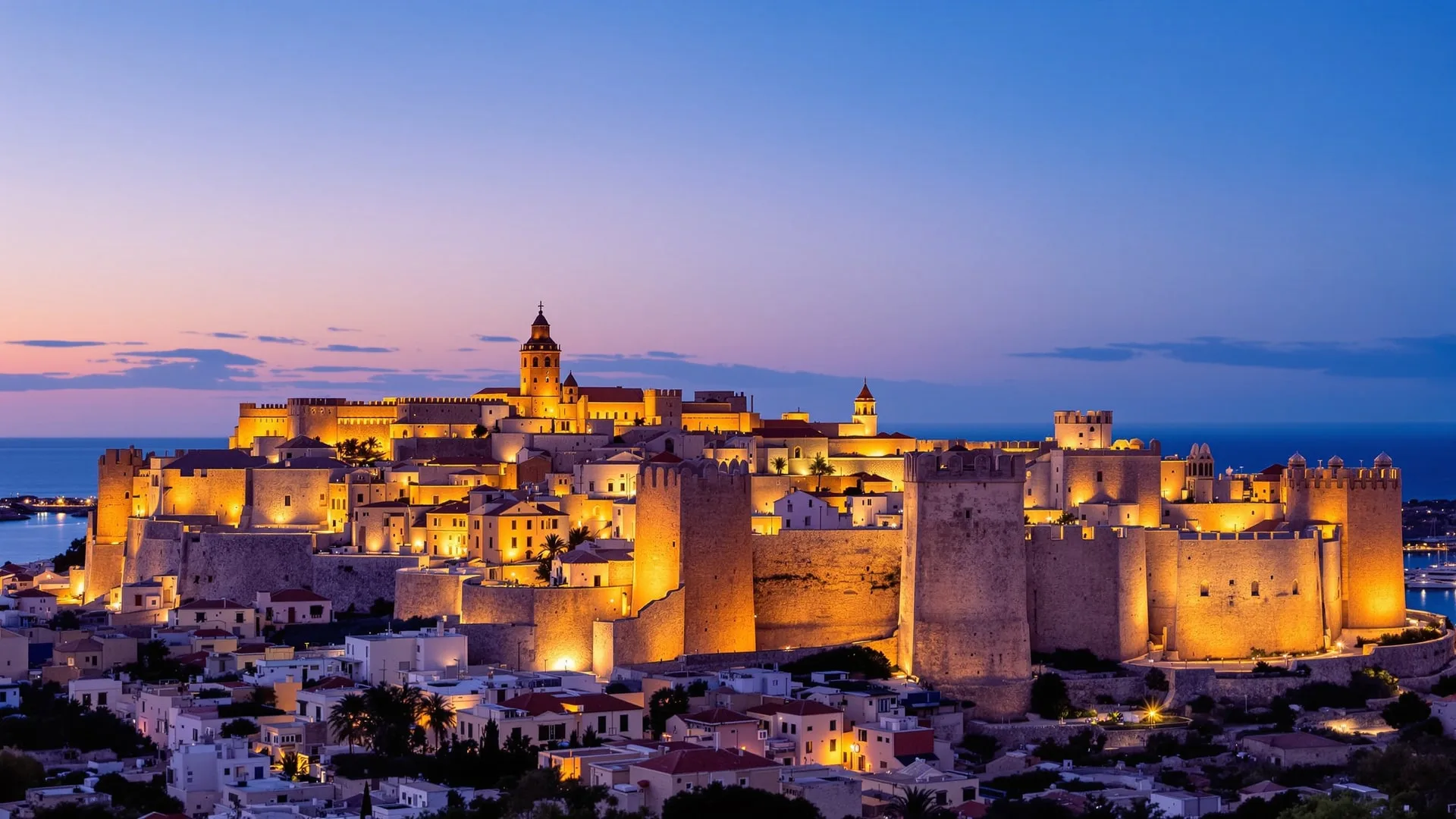
Victoria (Rabat, Gozo) and particularly the Citadella have been the focus of major public programming. The Citadella — the fortified upper city above Victoria, with its cathedral, museums, and extraordinary 360-degree views — has hosted a series of cultural events, performances, and installations through 2026.
The main It-Tokk square in Victoria has been used for free-access public events: music, theatre, film screenings, and community-oriented programming that deliberately reaches beyond the tourist circuit to engage the Gozitan community itself. This community dimension is one of the things the European Capital of Culture guidelines require, and it shows.
Music, performance and public art
An international programme of performances has brought European and international artists to Gozo in 2026, with venues ranging from the Citadella to village feast squares, from the restored theatre in Victoria to open-air settings at Dwejra and along the coastal cliffs.
Some of these performances are free-access public events. Others require tickets. The programme schedule is published through the Gozo 2026 Foundation website, updated monthly through the year.
Environmental and landscape culture
A strand of the programme specifically addresses Gozo’s relationship with its natural environment: the salt pans at Marsalforn (which have been worked continuously for centuries), the agricultural terraces of the interior, the marine environment of the western coast. Cultural events, scientific installations, and documentary work have made this ecological heritage visible in ways that the standard tourism circuit does not.
What this changes for a visitor in 2026
For a visitor doing a standard day trip to Gozo or a short stay of two or three days, the practical changes from the Cultural Capital year are moderate rather than dramatic:
Ggantija: The improved interpretation at the temples is a genuine enhancement and is permanent — the investment in the visitor experience is not temporary for the programme year. For visitors who care about understanding what they are looking at, 2026 is a better time to visit Ggantija than recent years.
Victoria programming: If your Gozo visit falls on a date when one of the major programme events is happening in Victoria or at the Citadella, you may encounter cultural events that are not normally part of a Gozo visit. The programme calendar is worth checking before you go.
Slightly higher visitor numbers: The Capital of Culture designation generates European media coverage and draws additional visitors, particularly from France, Germany, Italy, and the Netherlands. Gozo in spring and summer 2026 has been measurably busier than the equivalent period in 2024. Not Comino in August busier — Gozo is still Gozo — but perceptibly more visitors in Victoria and at the main sites.
Accommodation pressures: Particularly for the weeks around specific major programme events, Gozo accommodation has been booking ahead faster than usual. If you are planning to stay overnight on Gozo during 2026, book earlier than you normally would.
How to visit Gozo in the Cultural Capital year
The foundation of a Gozo visit does not change because of the Cultural Capital designation: the island is extraordinary for its history, its landscape, and its distinct character, and those things exist regardless of what programme year it is.
For the maximum engagement with the Cultural Capital programme, the Victoria and Citadella area is the hub. A morning at the Citadella — cathedral, museums, and the extraordinary views from the walls — followed by lunch in Victoria town, is the right base for any cultural visit.
Gozo Victoria Walking Tour↗For where to stay in Gozo, the choice between Victoria (for access to city events), Xlendi (for the bay and the southwest), Marsalforn (north coast beaches and the salt pans), and San Lawrenz (for Dwejra and the western coast) depends on your interests and whether you want to actively engage with the Cultural Capital programming.
For visitors combining Gozo with the rest of a Malta trip, the 7-day Malta itinerary with two nights on Gozo allows proper time on the island without rushing, and in 2026 specifically gives enough time to see both the permanent Gozo highlights and something from the cultural programme.
Planning a Gozo visit around the programme, practically
If you want to fold the Cultural Capital programme into a standard Gozo trip rather than build a whole visit around it, the logistics are straightforward. Base yourself in Victoria or nearby Xaghra for the easiest access to Citadella events, or in Marsalforn or Xlendi if beach access and a quieter evening matter more than being in walking distance of It-Tokk square.
Check the Gozo 2026 Foundation’s published calendar before finalising dates — some of the highest-profile performances are ticketed and sell out weeks ahead, unlike most everyday Gozo experiences. If a specific event isn’t the reason for your trip, don’t restructure your itinerary around the programme; the Ġgantija temples, the Dwejra coastline, and the Blue Lagoon day trip from Comino remain the core of a Gozo visit regardless of the cultural calendar.
For travellers combining Gozo with mainland Malta, the Malta and Gozo diving itinerary or a standard multi-day Malta plan both accommodate a Gozo stay comfortably — none of the Cultural Capital scheduling requires restructuring a trip that already includes two or three nights on the island.
The legacy question: what stays after 2026
European Capital of Culture programmes are explicitly designed to produce lasting cultural infrastructure, not just a year of events. The question of what Gozo keeps after the designation expires is worth asking.
Some of the Ggantija interpretation improvements are permanent investments in physical visitor experience — they will be there when you visit in 2027 or 2028. Some of the relationships established between Gozitan cultural organisations and their European counterparts will continue to produce collaborations beyond the programme year. The infrastructure investments made in anticipation of the Capital of Culture year — improved signage, restored public spaces, upgraded venues — are physical changes that last.
The less tangible legacy: a year of international attention on Gozo that positions the island differently in the European cultural consciousness. Whether that translates into increased cultural tourism in the years following — the Valletta effect was real and measurable — depends partly on how well the programme was executed and marketed, and partly on factors outside anyone’s control.
For visitors in 2026, the combination of the programme year’s events and the permanent improvements creates the most compelling moment to visit Gozo since the island became internationally known.
The Citadella: the heart of the programme
The Citadella above Victoria deserves specific mention because it is simultaneously the most important heritage site on Gozo and the one most likely to be enhanced by the 2026 programme’s conservation investments.
The Citadella’s fortifications, cathedral, and four small museums (archaeology, natural science, folklore, and old prison) tell the compressed story of Gozo’s history from prehistoric times through the Knights of Malta to the British colonial period. The views from the walls are genuinely extraordinary — on a clear day, the entire island is visible, with Malta on the horizon and the Mediterranean on every side.
For a half-day Citadella visit followed by lunch in Victoria’s main square, the walking tour with a guide brings the layers of history to life in a way that self-guided wandering cannot fully replicate.
The things that have not changed
The Gozo ferry operates the same way it has always operated. The Cirkewwa-Mgarr crossing is still 4.65 euros return as a foot passenger. The vehicle ferry still queues badly on Friday afternoons and Sunday evenings in summer. The catamaran from Valletta is still the most comfortable option for day visits.
The food is unchanged: gbejniet, ftajjar, the fish of the week at a Victoria restaurant, a glass of Gozo’s own wine from the Marsalforn hills. These are not programmed cultural events; they are the texture of daily life on a small island that has been making its food the same way for a very long time.
Ramla Bay’s orange-red sand, the views from the Citadella, the walk to Dwejra and the Inland Sea at the end of a September afternoon — none of that changes because of a designation. The Capital of Culture year adds a layer of programming and international attention. The island itself is what it has always been, and what has always been extraordinary.
FAQ
Do I need to book Ġgantija tickets specifically because of the Cultural Capital programme? Not usually — the temple itself rarely sells out — but if your visit coincides with a major Citadella or Victoria event, checking the Gozo 2026 Foundation calendar in advance avoids surprises with parking and crowds.
Is 2026 a more expensive year to visit Gozo? Slightly, particularly for accommodation around major programme dates and in peak summer — booking a few weeks earlier than you normally would is the practical adjustment, but day-to-day costs like the ferry and food have not changed because of the designation.
Related guides

Top 10 things to do in Gozo in 2026
The 10 best Gozo experiences in 2026: Citadella, Ggantija temples, Dwejra Inland Sea, Ramla Bay, quad tours, kayaking and the salt pans. Honest picks.

The 12 best day trips from Malta (ranked honestly)
The 12 best day trips from Malta honestly ranked: Gozo by ferry, Comino Blue Lagoon, Sicily by catamaran, Mdina, Three Cities, and more. What's worth your day

Village festas in Malta: fireworks, brass bands and patron saints
Every summer weekend a different Maltese village celebrates its patron saint with deafening fireworks, brass bands and processions. Completely free

Malta language guide: Maltese, English and what to expect
Malta has two official languages: Maltese and English. English is everywhere. Knowing a few Maltese words delights locals. Italian is understood in many places